
San Jacinto Root Zone Calculation for TPZ Fencing: Compliance Guide
Diamond Valley Fence Rentals helps San Jacinto contractors and property owners calculate Critical Root Zone and set compliant TPZ fencing for projects near Downtown San Jacinto, Santa Fe, and Five Points. We account for local site conditions, older 1920-1950 building areas, and dry Inland Empire climate challenges so your fencing plan supports inspections and protects roots. Use our clear formula and local guidance to stay on schedule and avoid municipal penalties.
Root Zone Calculation for TPZ Fencing: Compliance Guide
In San Jacinto, protecting tree root zones isn’t just good practice—it’s often required by local ordinance, especially near landmarks like Sallee Park or in historic districts. We calculate the Tree Protection Zone (TPZ) based on trunk diameter at breast height, then install fencing that stays outside that boundary. Our crew uses wheel-assisted gates and interlocking hooks to minimize ground impact while maintaining secure perimeters. This approach keeps your site compliant and trees healthy during construction or events across Santa Fe, Five Points, or Downtown San Jacinto.
Calculation Steps
- Verify tree species and trunk diameter to determine protected root zone radius
- Confirm local San Jacinto ordinances with latest municipal guidelines
- Use non-penetrating bases like our concrete-steel bases to avoid root damage
| Trunk Diameter (inches) | Min. TPZ Radius (feet) | Recommended Fence Type |
|---|---|---|
| 6–12 | 10 | TPZ Panels with zero-trip bases |
| 12–24 | 15 | TPZ Panels + dust-control mesh |
| 24+ | 20+ | Custom layout using modular reconfiguration and wind-load resistance hardware |
Root Zone Calculation for TPZ Fencing in San Jacinto, CA
Root zone calculation starts with the trunk diameter, then converts that measurement into a protection radius before any tree protection zones in Downtown San Jacinto Historic District get set. Crews working near tree protection ordinances in Vosburg keep fencing outside the active root area so compaction stays off feeder roots. At concrete steel bases in Five Points, heavier hardware is kept off the root spread when the soil is soft. Field checks near fence blow over prevention at Park Hill also matter because fence movement can disturb shallow roots. A clean layout uses survey marks, trunk measurements, and local tree rules before panels go in.
Key Terminology
- TPZ
- Tree Protection Zone marks the soil area around a trunk where root activity stays active, often mapped before fencing in San Jacinto, CA.
- root radius
- Root radius sets the distance from trunk to fence line, used near Park Hill sites when crews avoid cutting structural roots.
- dripline
- Dripline is the canopy edge used with Downtown San Jacinto Historic District tree checks to estimate likely feeder-root spread.
- fencing setback
- Fencing setback is the offset from trunk to panels, chosen at Five Points jobs to keep posts out of major roots.
- root protection
- Root protection means placing barriers, bases, and access routes to limit compaction near Vosburg yards under city tree rules.
- survey line
- Survey line is the marked boundary used by crews in San Jacinto, CA to place TPZ fencing without drifting into root space.
In Simple Terms
TPZ fencing starts with the tree trunk size, then a root protection ring is marked around it in San Jacinto, CA. That ring keeps posts, feet, and fence bases out of the soil where roots feed. In Downtown San Jacinto Historic District, older trees need more space because root damage shows up after grading and compacting. In Vosburg and Five Points, crews use the marked radius to place panels, gates, and bases without digging into the root zone.
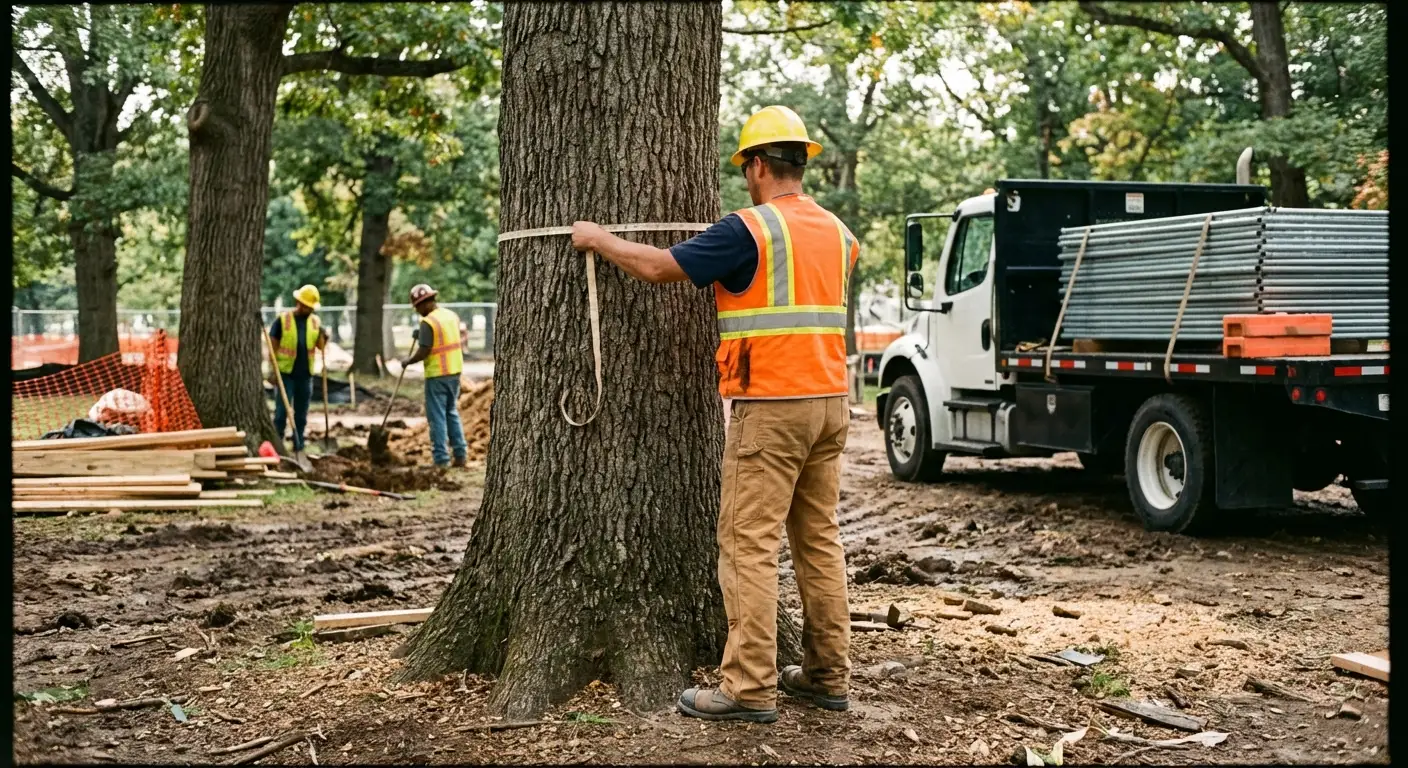
Root Zone Calculation Compliance Specifications
Accurate root zone depth ensures TPZ fence stability and meets San Jacinto municipal and OSHA standards across all designated zones.
| Fence Type | Temporary Perimeter Zone (TPZ) Fencing |
|---|---|
| Root Zone Depth Requirement | 18–24 inches below grade per OSHA 1926.1400 |
| Soil Displacement Allowance | Max 2% slope deviation in Vosburg clay-loam soils |
| Historic District Clearance | $425-$575 (Downtown San Jacinto compliance buffer) |
| Commercial Zone Installation | $380-$520 (Five Points traffic-adjacent setup) |
| Residential Zone Installation | $320-$460 (Vosburg neighborhood standard) |
| Signage Interval | Every 30 linear feet |
Root Zone Calculation for TPZ Fencing in San Jacinto
Ensure compliance with local tree protection regulations.
Common Mistakes in Root Zone Calculation for TPZ Fencing
Root zone calculation for TPZ fencing demands precision to comply with local codes and protect tree health. Mistakes put your project and trees at risk around San Jacinto’s neighborhoods like Vosburg and Commonwealth.
Ignoring Tree Species Variability
Failing to account for different tree species' root spread leads to inaccurate TPZ fencing placement, risking damage to roots and non-compliance with city codes near Park Hill.
Identify tree species first and adjust root zone calculations based on species-specific root growth patterns.
Using Fixed Radius Instead of Caliper-Based Measurement
Applying a one-size-fits-all radius disregards tree trunk size, which can cause fencing to encroach too close or be unnecessarily distant, affecting tree health and site safety.
Measure trunk caliper and calculate TPZ radius accordingly for accurate fencing placement.
Overlooking Soil and Site Conditions
Ignoring soil type and slope changes can misrepresent root zones, leading to fencing that doesn’t protect roots properly, especially in hilly areas like Santa Fe.
Assess soil and terrain before finalizing root zone measurements for TPZ fencing.
Failing to Mark and Verify TPZ Boundaries On-Site
Skipping on-site marking causes misplacement of fencing, increasing risk of root damage and potential OSHA violations during construction or events.
Mark TPZ boundaries clearly on-site and verify with GPS or survey tools before installation.
Neglecting Local Ordinances and Updates
Using outdated or generic guidelines ignores San Jacinto’s specific tree protection rules, which can result in fines and rework, especially around historic 1920-1950 buildings.
Check current municipal codes and adjust root zone calculations accordingly.
Root Zone Calculation for TPZ Fencing: Compliance Guide — Part 2
We get it up fast, so you can get back to work—without cutting corners on tree protection. Since 2008, Diamond Valley Fence Rentals has treated every temporary perimeter as both a safety barrier and a stewardship zone. In San Jacinto’s mix of historic charm and active development, respecting root zones isn’t optional. It’s how we keep sites compliant, trees healthy, and projects moving.
-
Measure Twice, Fence Once
Accurate root zone calculations prevent costly rework and ensure TPZ fencing stays secure without damaging protected tree roots. We map root spread using on-site observation and local soil data typical of San Jacinto’s clay-loam mix.In PracticeAt a Santa Fe job near industrial zones, we adjusted panel spacing after detecting shallow roots within 18 inches of the surface.
-
Stability Without Compromise
Our base systems respect root zones while maintaining wind resistance. We select from concrete or steel bases based on ground sensitivity and expected loads, avoiding deep driving that could harm root structures.In PracticeFor a Downtown San Jacinto Historic District event near Estudillo Mansion, we used concrete-steel bases to avoid soil penetration.
-
Compliance Built In
Local tree protection ordinances dictate minimum setbacks and installation methods. We cross-reference municipal rules with real-time site conditions to ensure every TPZ fence meets San Jacinto’s environmental standards.In PracticeIn Five Points, we aligned our layout with tree protection ordinances during a downtown retail expansion.
-
Speed Through Precision
Pre-calculating root zones means faster deployment without guesswork. Our crew arrives with panel counts, base types, and gate placements already adjusted for root-sensitive terrain.In PracticeAfter a windstorm cleanup near Commonwealth, we had tree protection zones fenced within 2 hours using pre-mapped root data.
Every TPZ fence we install reflects our training as AFA Certified Fence Professionals and our firsthand experience with San Jacinto’s unique soil, weather, and ordinances.
Root Zone Calculation for TPZ Fencing Compliance in San Jacinto
Guidance on calculating root zones for Tree Protection Zone fencing around San Jacinto landmarks and neighborhoods.
What defines the TPZ root zone radius in San Jacinto?
The root zone radius equals one foot per inch of trunk diameter measured at 4.5 feet above ground, consistent with San Jacinto city regulations near Sallee Park.
How does root zone calculation differ in The Commonwealth neighborhood?
In The Commonwealth, older Spanish Colonial Revival trees require root protection extending beyond standard radius due to shallow root systems and compacted soil conditions.
What fencing materials are recommended for TPZs in Downtown San Jacinto?
Diamond Valley Fence Rentals uses chain-link fencing for TPZs near historic buildings, balancing protection with visibility required by local preservation rules.
Are there specific OSHA guidelines for TPZ fencing installation in Santa Fe?
OSHA requires secure fencing around TPZs in Santa Fe’s industrial and civic spaces to prevent worker injury and ensure compliance during construction phases.
How to handle root zone fencing near 1920-1950 buildings in San Jacinto?
Fencing must accommodate the Minimal Traditional style foundations, avoiding penetration and respecting preservation standards enforced by city inspectors.
What is the impact of soil compaction on TPZ fencing placement in San Jacinto?
Soil compaction reduces effective root zones, requiring larger fenced areas especially near Sallee Park to prevent damage during construction activities.
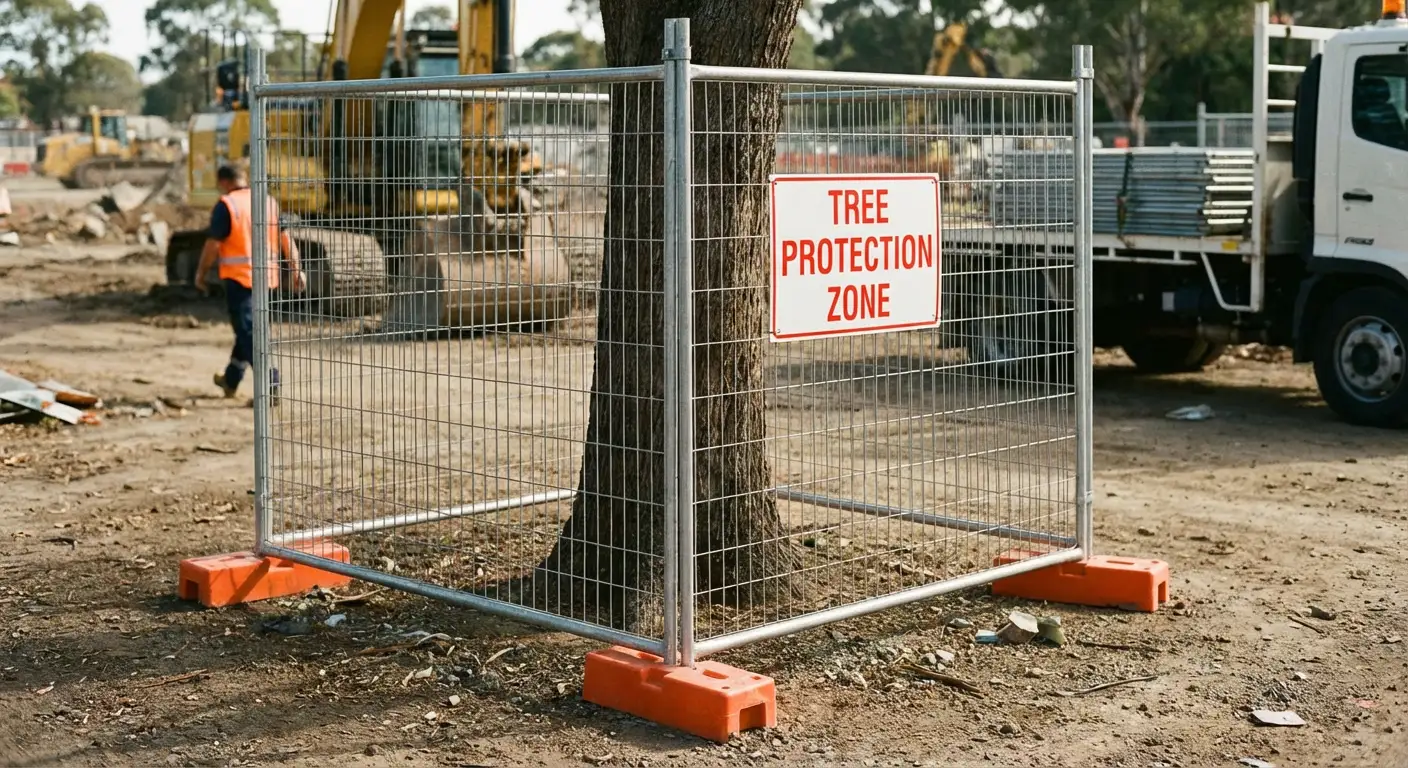
TPZ Fencing Root Zone Compliance Guide
Ensure compliance with San Jacinto TPZ fencing regulations. Proper root zone calculation protects trees during construction.
Serving San Jacinto contractors since 2015